


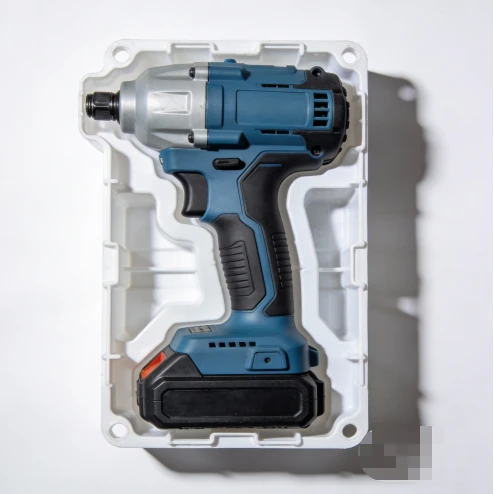
Custom Design Power Tool Handle Mold: Product Introduction
Product Overview
Our custom-designed Power Tool Handle Molds are engineered to create the critical interface between user and machine, balancing ergonomics, durability, and high-volume manufacturability. We specialize in producing molds for handles that meet rigorous demands for impact resistance, fatigue strength, and secure grip under various conditions. Our solutions cover the full spectrum from standard drill/driver handles to complex overmolded grips for angle grinders, saws, and demolition hammers. By integrating advanced mold design with material science expertise, we deliver handles that enhance user comfort, reduce operator fatigue, and withstand the intense physical and environmental stresses of professional power tool use.
Manufacturer Advantages
Ergonomic & Structural Engineering Focus
We combine industrial design aesthetics with functional engineering. Our team utilizes 3D scanning and ergonomic simulation software to optimize grip geometry, vibration dampening features, and weight distribution long before tooling begins, ensuring superior user comfort and tool control.
End-to-End Production Support
We provide more than just a mold. Our service includes comprehensive material selection guidance (for high-impact, UV-stable, and chemical-resistant grades), prototyping, process optimization for injection molding, and thorough testing validation to meet drop-test and performance standards.
Expertise in Multi-Material & Overmolding
A key strength is our proficiency in designing molds for dual-material handles (e.g., rigid substrate with a soft-touch TPE/TPU overmold). We master the complexities of material adhesion, bonding interfaces, and sequential molding processes to create handles with integrated non-slip grips, seals, or cushioned zones.
High-Durability Mold Construction
Understanding that power tool components are produced in high volumes, we build our molds for endurance. We use premium hardened steels (e.g., H13, Stainless) for critical cores and cavities, integrate robust ejection systems, and design for rapid cycle times to ensure long tool life and consistent part quality over millions of cycles.


Certifications and Qualifications
Our manufacturing systems are certified to meet the quality and consistency requirements of global industrial manufacturers:
- ISO 9001: 2015 certified for our quality management system in design and manufacturing.
- ISO 14001: 2015 certified for environmental management.
While not automotive-specific (IATF 16949), our processes are aligned with stringent quality control methodologies like Advanced Product Quality Planning (APQP) and Production Part Approval Process (PPAP) for major client projects.
Our in-house testing and partnerships with labs allow us to validate parts against key standards such as UL (for electrical tools), IEC, and specific OEM mechanical/performance specifications for impact, torque, and longevity.


Frequently Asked Questions (FAQ)
Q1: What are the most important design considerations for a power tool handle mold?
A: Critical factors include: Ergonomics (comfort and grip for extended use), Structural Integrity (resisting drop impacts and internal mounting stresses), Material Selection (impact strength, chemical/oil resistance), and Manufacturability (uniform wall thickness, proper rib design, draft angles, and gate locations to avoid weak points or sinks).
Q2: Can you design a mold for a handle with a soft-touch overmolded grip?
A: Absolutely. This is one of our core specialties. We design precision multi-shot or insert overmolding solutions that perfectly bond a soft elastomer (like TPE or TPU) to a rigid skeleton (like PA6, PA66, or PC/ABS), creating a seamless, durable, and comfortable grip.
Q3: What materials do you typically recommend for power tool handles?
A: Common choices include:
- Rigid Frame: Glass-filled Nylon (PA6-GF, PA66-GF) for high strength and stiffness; PC/ABS blends for good impact and dimensional stability.
- Overmold Grip: Thermoplastic Elastomers (TPE, TPU) in varying hardness (Shore A) for anti-slip and vibration dampening.
We help select the optimal material pair for performance, cost, and bonding compatibility.
Q4: How do you ensure the handle can pass standard drop tests and longevity tests?
A: We employ CAE simulation (like Moldflow and structural FEA) during design to predict stress points and potential failure modes. We then prototype and conduct physical validation tests, including drop testing (e.g., 1-meter drops onto concrete) and fatigue testing, often in collaboration with our clients' labs, to ensure the design is robust before finalizing the mold.
Q5: What is the lead time for a custom handle mold?
A: For a standard, single-material handle mold, lead time is typically 8-12 weeks. For a complex, dual-material/overmold tool, lead time can extend to 14-18 weeks from final design approval to first approved samples. We provide detailed project timelines upfront.
Q6: Do you offer design for assembly (DFA) support for integrating internal components?
A: Yes. We design mold features that create precise locators, snap-fits, screw bosses, and channels for wiring/cabling, ensuring the molded handle interfaces seamlessly with motor housings, switches, and battery packs during the tool's final assembly.
Q7: What is your typical production capacity and MOQ?
A: We are geared for medium to high-volume production, commonly serving MOQs in the tens or hundreds of thousands. Our molds are built for high-cycle production, and we can scale manufacturing to meet annual volume requirements through our injection molding partnerships or in-house capacity.
Hot Tags: power tool handle mold, China power tool handle mold manufacturers, suppliers, factory, Automotive Fog Light Mold, injection mold, Two color Injection Mold, Two color Lamp Cover Mold, Two color Taillight Mold, Two color Turn Signal Mold